

Can gross, spammy AI ads be stopped?
No one wants to see these toothpaste ads, but moderating them is difficult.

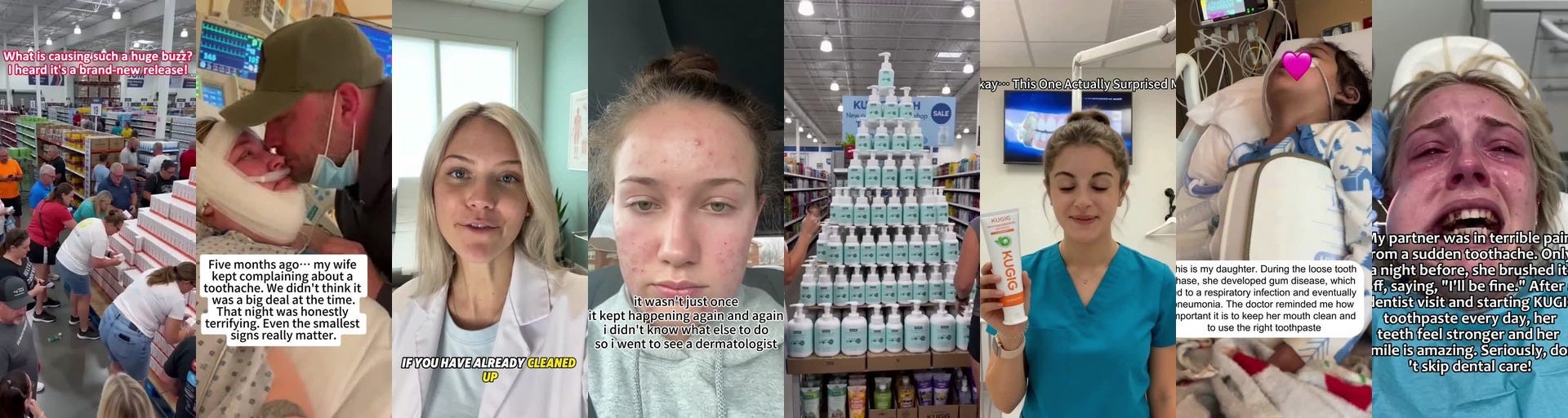
I doubt that you’ve heard of KUGIG, but you might have seen their AI ads without realizing it.
An oxygenated, comedically-bandaged woman lays in a hospital bed. Her husband cries over her, kisses her cheek, and whimpers, “I’m right here baby, I love you.” The woman could die… if she hadn’t followed her doctor’s advice and switched to KUGIG toothpaste.
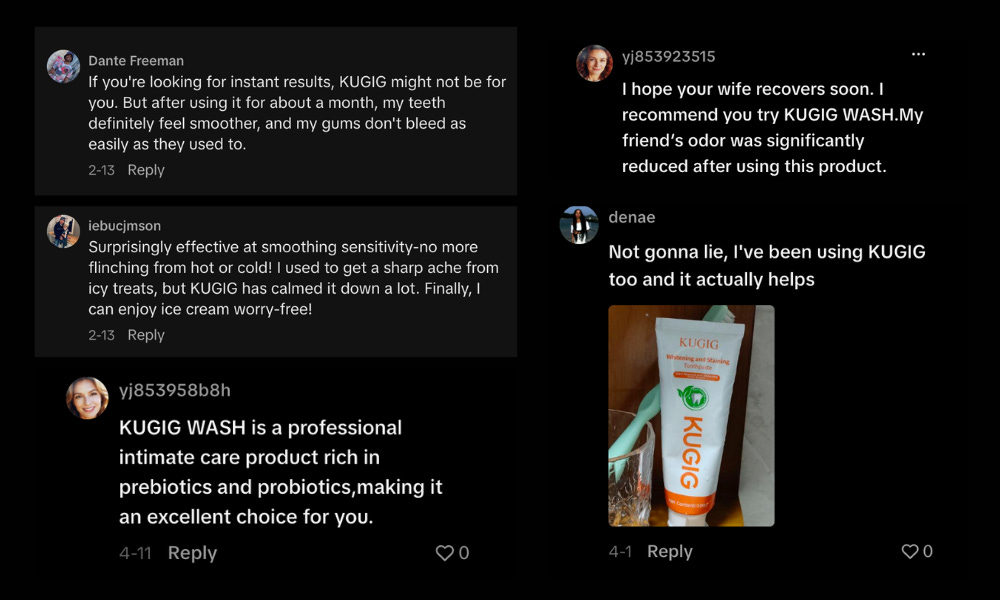
“Wanda Dear898” commented, “I switched to KUGIG toothpaste before, and to be honest, my gums are no longer so sensitive now.” This comment has a long thread of responses, each talking about how KUGIG toothpaste fixed their swollen face, yellowed teeth, or toothaches.
This absurd, spammy AI video had over 3.1 million views before it was removed. It’s one of many AI-generated ads made for KUGIG. These videos are dumb, sloppy, and manipulative, but there are so many of them that they’re probably working.
This is an unregulated and unlabeled advertising campaign making unsubstantiated and misleading claims about healthcare products. But even in a sea of spammy AI ads, KUGIG’s stand out.
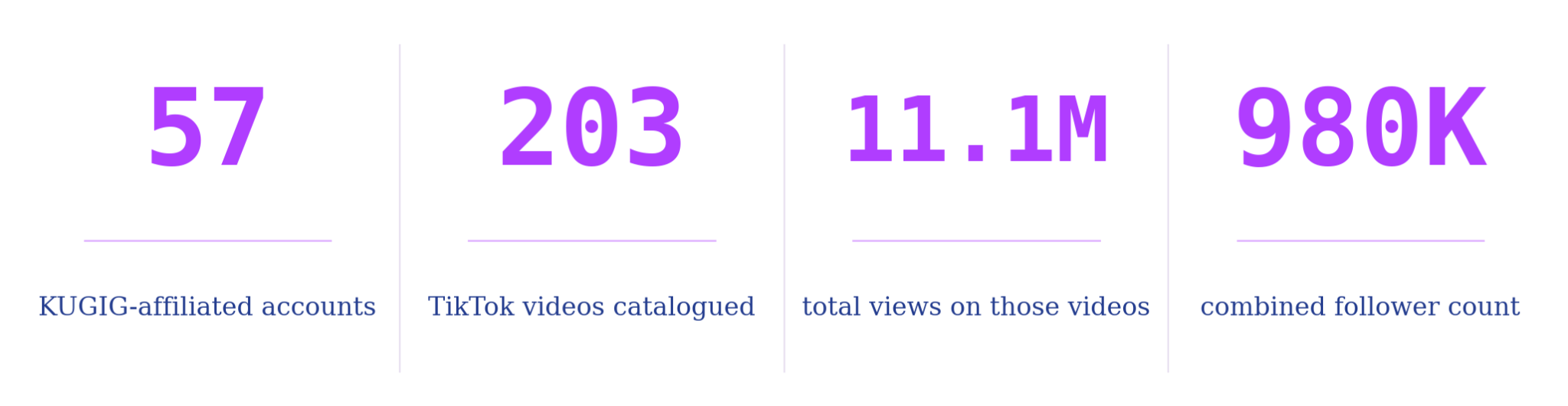
The Riddance team watched over 200 of them, tallying over 11 million views. These videos came from 57 accounts, but there are certainly more accounts and videos out there. We had to stop somewhere, so we only watched and tallied a few videos per page.
Riddance reached out to TikTok for a comment and provided them a list of confirmed KUGIG-affiliated accounts. Within three days, all of these accounts were offline. But despite our reporting and TikTok’s response, there are many more KUGIG-affiliated accounts and videos popping up every day.
It’s not “organic” for swarms of accounts to only make AI videos about a small hygiene brand sold exclusively through an Amazon storefront called “HKKANGXING” and a few TikTok shops. Their Amazon storefront is based in Hong Kong, and their TikTok shops are based in Henan, China.
How does this happen, and how do large campaigns like this fly under the radar for so long?
How the videos are made
The “woman in a hospital” video type is just one of the of many bombastic, AI-generated videos in the campaign. Other examples include:
A woman sobs in a dentist chair. She has a huge bulge on the inside of her cheek. Her teeth are black and rotting as a dentist tool pries at her cheek. The caption includes “my dentist told me to switch to KUGIG Toothpaste.”
A Costco-esque store is overrun by crowds fighting over KUGIG wash, piled high in a pyramid. The caption is “My God! Please stop fighting over it!”
A young woman cries and complains that her “whole face is on fire.” A woman (presumably her mother) opens her mouth to reveal disgusting teeth. The caption reads, “She’s complaining that I didn’t pick out a good toothpaste for her.” The comments include a planted comment recommending KUGIG toothpaste.
There are also AI-generated selfie testimonials from teenagers, “Pixar-styled” AI advertisements, fake doctor testimonials, and more.
Two accounts clearly demonstrate a unique trait of the KUGIG campaign. Both have the bio “We listened to the doctor and switched to KUGIG Wash. No more issues now.” Rather than posting exactly identical AI videos, they post nearly identical AI videos. For example, they each posted two videos of a black man with dreadlocks. These four videos were probably all from the same batch-generation output of an AI video generator.
A prompt like “A black man with dreadlocks, a white t-shirt, and grey Nike sweatpants scratches his groin in the bathroom” could yield all four of these videos at once, because AI video generation is a bit random. This method was used extensively across the campaign’s many video types because it’s resourceful and helps them avoid spam detection.
How the accounts are linked
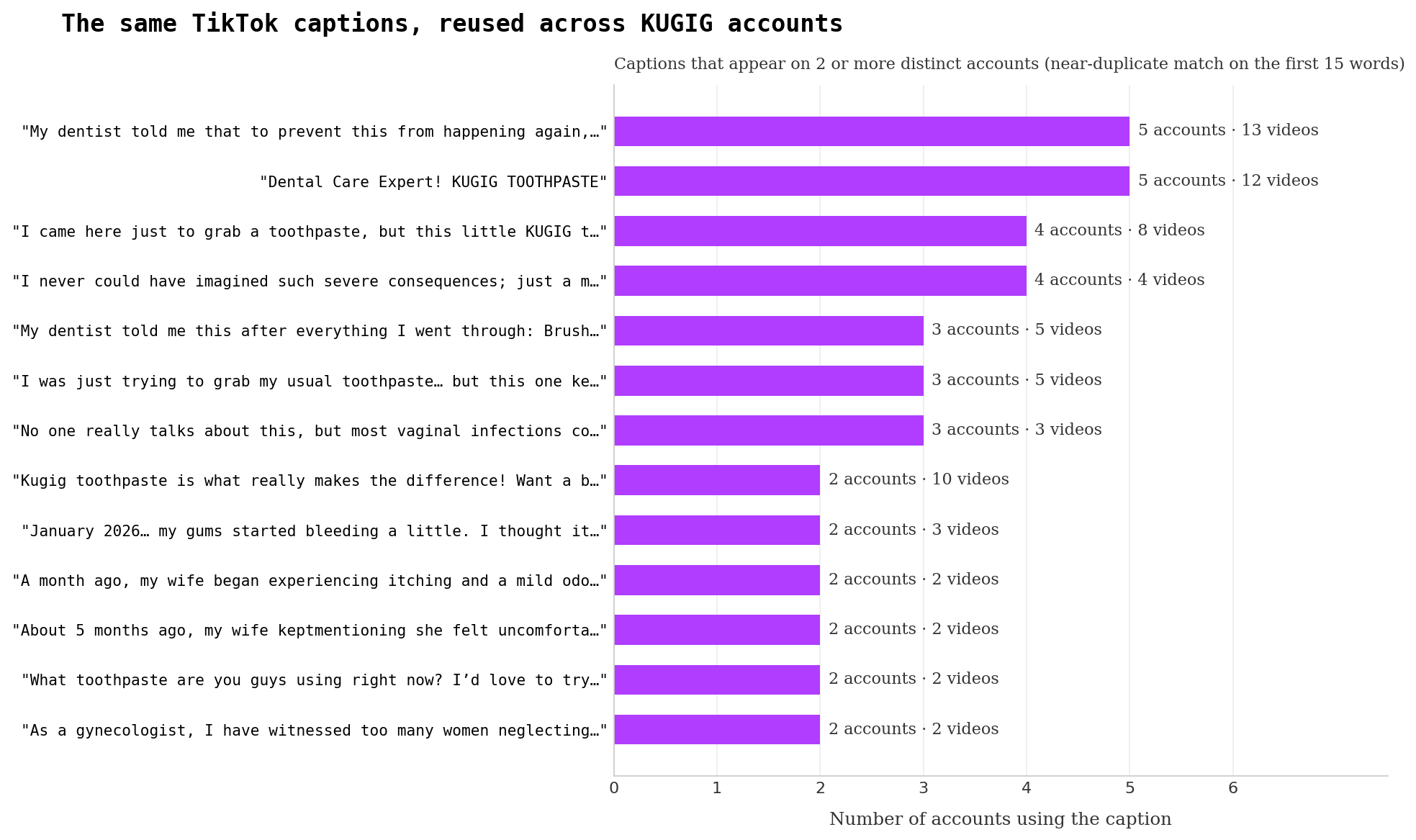
What accounts lack in duplicated videos they make up for with duplicated titles and hashtags. The caption “Dental Care Expert! KUGIG TOOTHPASTE” is both awkward and common. Remember, this isn’t an exhaustive sample of videos, so there are many more videos with that caption.
It’s sensible that videos in coordinated campaigns will coordinate hashtags, too. We saw nearly twice as many videos pushing KUGIG toothpaste as KUGIG wash, even though many accounts pushed both products. The hashtags reflected that balance.
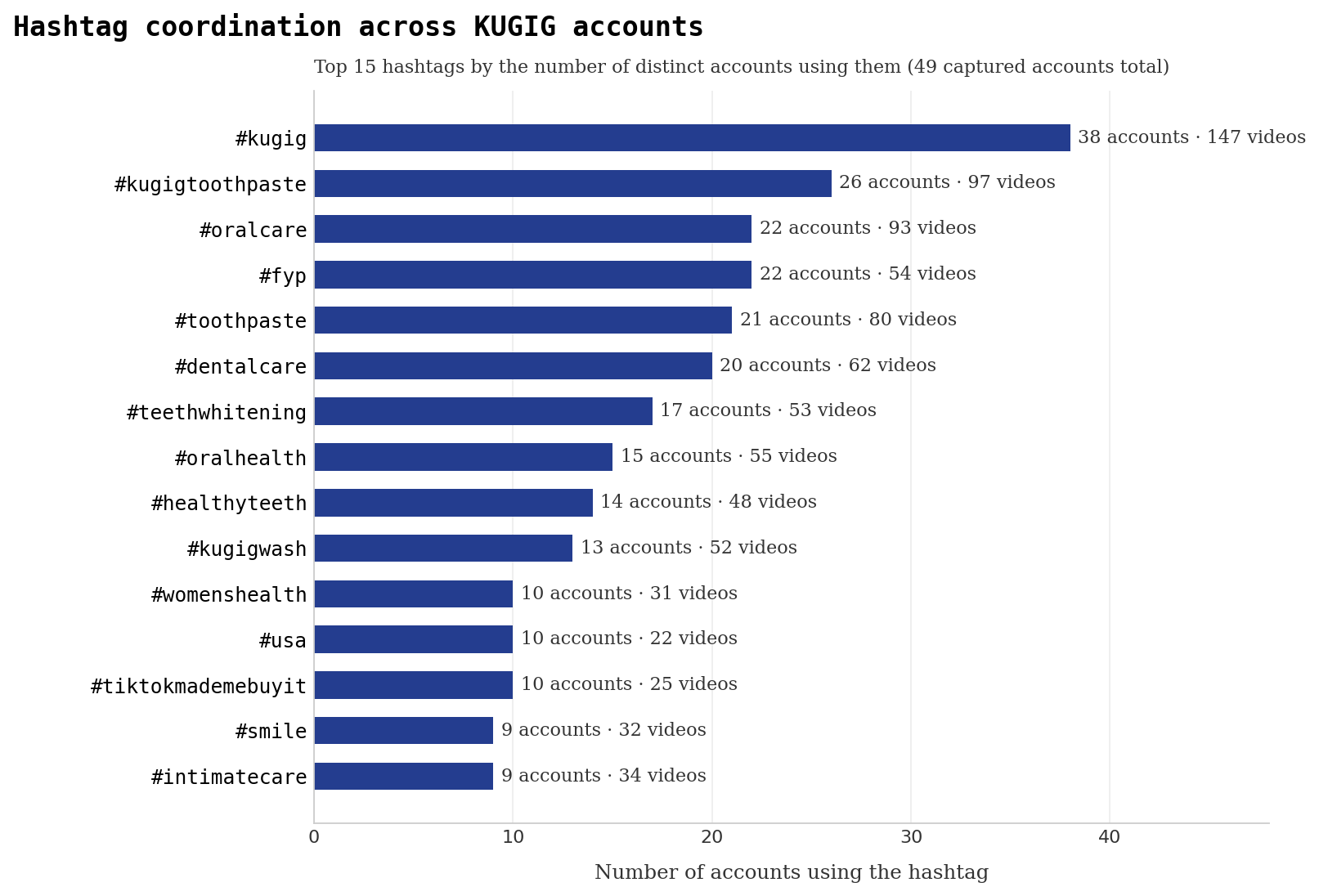
Many of the accounts were hilariously strict with comment moderation. One video had over 1.1 million views, but only 40 visible comments that all promoted KUGIG, presumably from coordinated bot accounts.
It’s very common to see fake accounts change hands between campaigns. Unlike human influencers, accounts with AI-generated content can make these pivots quickly and shamelessly.
One account was spamming AI slop of Buddha statues and Hello Kitty Cruises before it pivoted to AI videos of women wrapped up in blankets while crying in pain. Another account participated in an unrelated campaign for a healthcare supplement before pivoting to KUGIG products. Another went the opposite direction by starting with KUGIG videos, then switching to supplements during our research period.
What can be done?
These accounts break many of TikTok’s rules all at once, across their Community Guidelines, Advertising Policies, and Terms of Service. But moderating them is a daunting challenge.
While some of the videos and accounts were removed during our investigation, many of the most popular videos stayed up. The KUGIG-affiliated accounts don’t self-label AI videos. And yet, seven of the top ten videos by views were labeled with the “Contains AI-generated media” tag. This means that TikTok’s automated systems or manual reviews caught that these videos were AI-generated.
But this expansive campaign ventures into the “influence operation” space more than most spammy ad campaigns we’ve seen. It shares similarities with more sophisticated campaigns that make it harder to detect.
In a response to our report, TikTok qualified these accounts as “spammers [that] post AI or low-quality content to chase engagement, which is unfortunately a common issue across every social media platform.” They stated that they “work diligently to get ahead of these accounts, and proactively prevented over 350 million fake accounts from signing up in 2025.”
KUGIG resembles the drop shippers who use AI videos to pretend their products are handmade. It’s that playbook, scaled up for a “healthcare dropshipper,” using dozens of accounts to amplify manipulative AI videos. The AI-enhanced future of spammy, manipulative advertising is already here.
yo scammy ai doctor why you trying not to laugh bruh