

The 2026 Social Media Transparency Rankings
Which platforms make it possible to spot AI?

Social media platforms aren’t ready for AI media any more than you are. In a recent Threads post, Adam Mosseri, Head of Instagram, presented his vision for AI detection. He presents account transparency as the key to cut through “infinitely reproducible authenticity”:
We, as an industry, are going to need to surface much more context about not only the media on our platforms, but the accounts that are sharing it in order for people to be able to make informed decisions about what to believe. Where is the account? When was it created? What else have they posted?
Mosseri is absolutely right. It’s much easier to judge an account’s authenticity instead of the authenticity of individual posts. But most people don't think of it this way because:
There’s friction between algorithmic feeds and account transparency. If Instagram Reels’ job is to present you with a feed of engaging short videos, doesn’t checking account transparency interrupt that flow?
Instagram is full of reposts, which don’t tell you anything about the original video. Instagram’s algorithms encourage the proliferation of white-box repost videos and repost video personalities who regularly engage with AI without knowing it.
And yet, account transparency must be a priority for social media companies, even if it requires restructuring our feeds, rethinking what it means to spend time online, and getting users into some new habits. While AI detection at scale is difficult and expensive, revealing information like account age and location is easy and free.
The Opening Ceremony
I’m enjoying the Winter Olympics this year, so I want to award some medals. Athletes devote their lives to a once-every-four-year global event. Social media companies don’t know what Riddance is, and they don’t know they’re being judged. Other than that, they’re exactly the same.
Let’s present awards for account transparency information between five of the most popular platforms:
Instagram
TikTok
YouTube
Facebook
X
We’ll award platforms by quality of their account transparency information, and the user experience to find it, as of February of 2026. This will also be our de-facto “Account transparency guide“, so we’ll cover how to access important information on each of these five platforms. Since most of us are on some (or all) of these platforms, understanding where they rank may help you decide where to spend less time.
What should platforms show you?
This is the information we think is essential:
Account Age. Newer accounts are more likely to be deceptive.
Account Location. Does the account’s identity match where they are actually based? Location can be manipulated, but it’s still an important indicator.
Number of previous name changes. Account may change their name or handles occasionally, but deceptive accounts may change them regularly.
AI content labeling quality. How clear and visible are synthetic content labels?
Verification tools. What does verification mean for this platform?
Here are some nice-to-haves:
Easy access to information. How many taps away from account transparency are you?
Good media players. This is specific to AI video spotting, a Riddance speciality. Does the media player allow you to pause, zoom, and navigate easily to spot inconsistencies? Does it add processing that makes reality look like AI?
We won’t be judging them on their level of suspected or rumored bot activity. Let’s assume there are a lot of bots everywhere, and the platform’s AI detection and transparency has to step up regardless.
Let the games begin!
🥇Gold: Facebook🥇
Don’t call it an upset! Facebook has good page transparency. This is great because — I hate to say it — the Facebook audience needs the most help. Here’s how to find it:
Go to an account page.
Tap on the account’s name in bold
Now you’ll see basic information. To get more, click “Transparency and privacy policy”
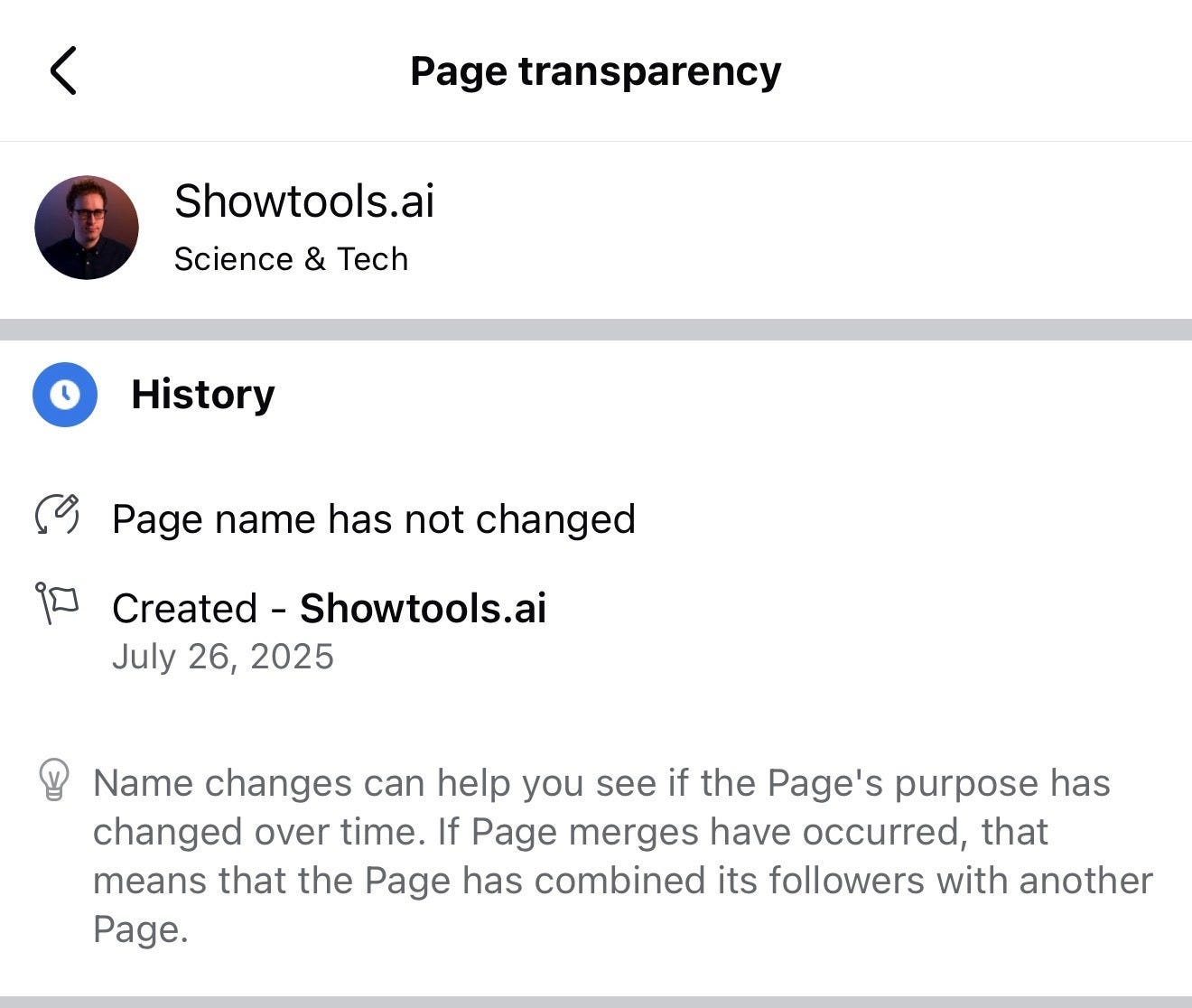
On the “Page Transparency” page, we can see if the page has been renamed and the page’s created date. You may also see the locations of the people who manage the page, or the location of the page itself. This will look different depending on what information is available.
This was updated recently; the Page Transparency used to be buried in the About Section.The information is more detailed, centralized, and much easier to access now. I also like how there are multiple levels: a quick glanceable version when tapping on the account’s name, and more detail if you want to dig in further.
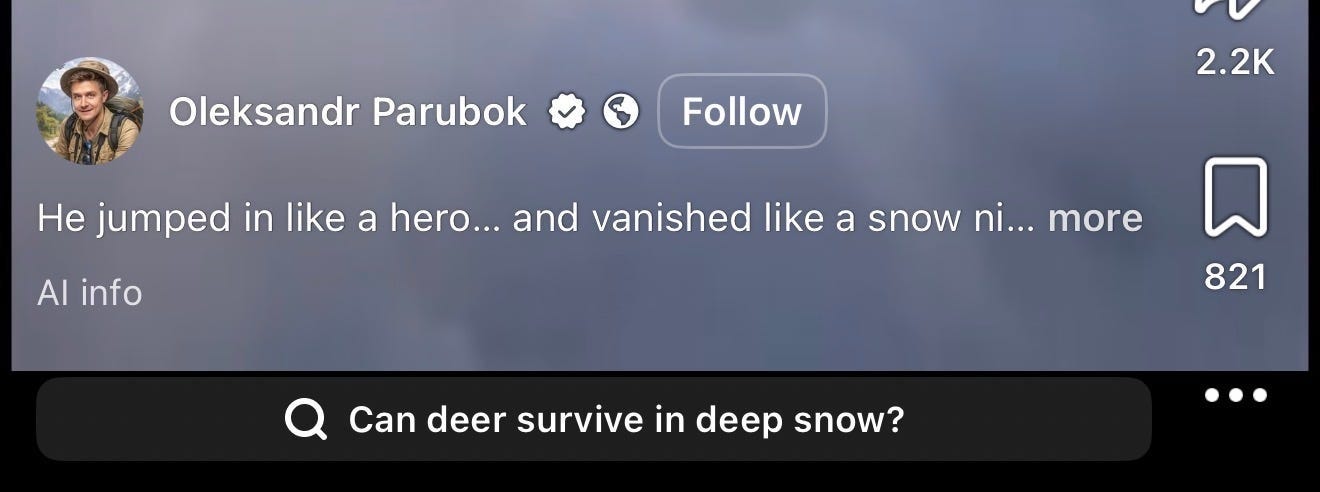
AI content labels: On videos, Facebook’s AI disclosure is small and hard to see, towards the bottom-left under the description. When tapping on it, you can see if the creator added an AI label. Facebook should take inspiration from TikTok, who puts their label in the same location, but theirs is larger and has a background to make it easier to see.
Verification: Meta’s Verification system allows users to buy verification. It’s not very restrictive, but does require an ID.
Media Player: The short-form player is very responsive, but does not let users zoom in.
Summary: Facebook is deserving of a gold, but this is a new event, like dual moguls. There is plenty of room to grow.
Pros: Multiple levels of transparency, good quality data, good transparency access, and AI labels are always present when necessary
Cons: AI label visibility, could use some improvements to the video player
🥈Silver: Instagram🥈
Another Meta platform steps onto the podium. Instagram makes it simple to find essential information. On either mobile or desktop:
Go to an account page.
Tap on the three dots to the right of the username
Tap “About this account”
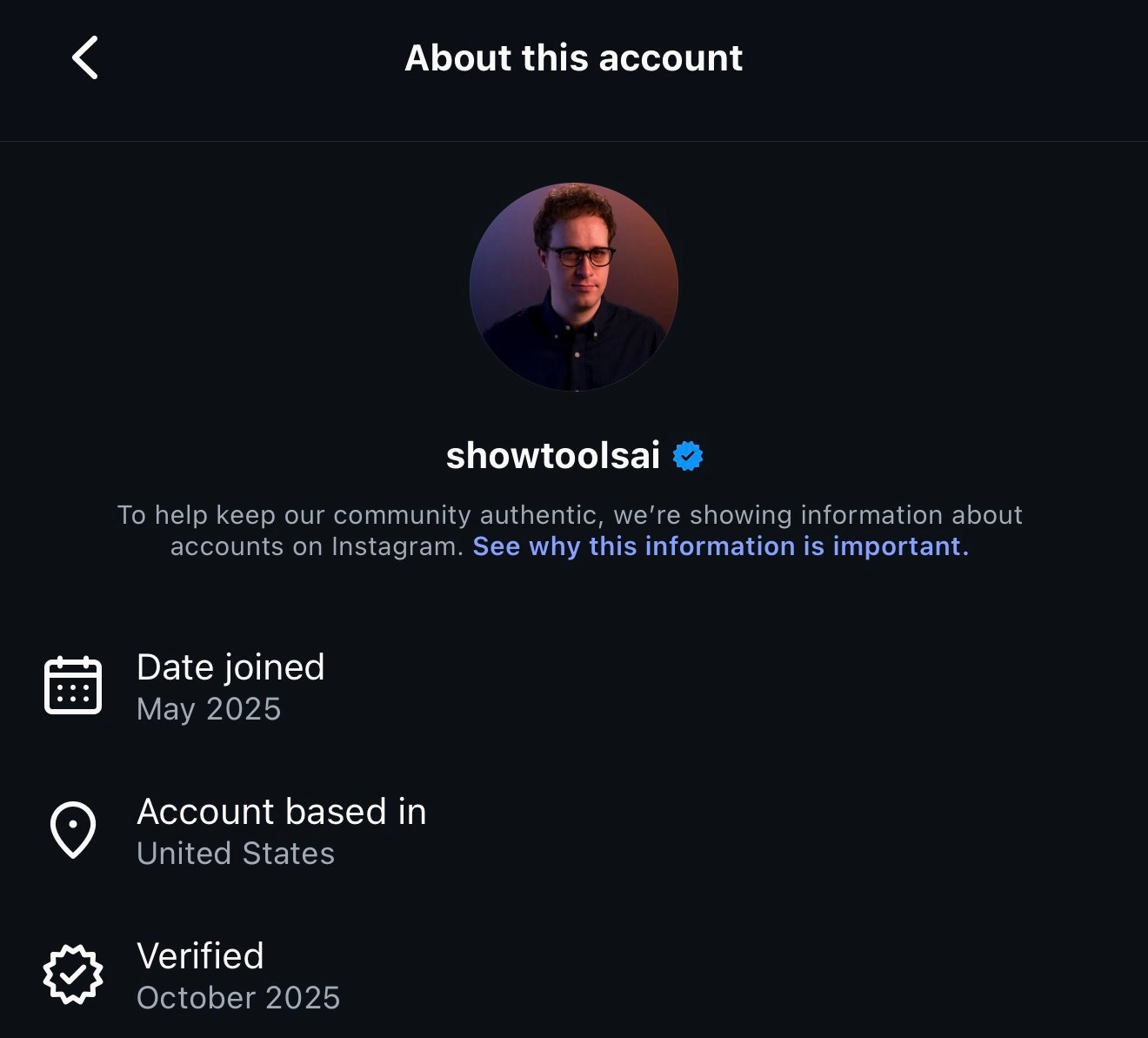
Here we see the account name with their verification status, the “Date joined”, “Account based in” location (if the user makes it available), and the number of former usernames if the account had any. Occasionally, you may also see an indicator listing other accounts this page’s followers engage with, which can give you an indication of follower patterns.
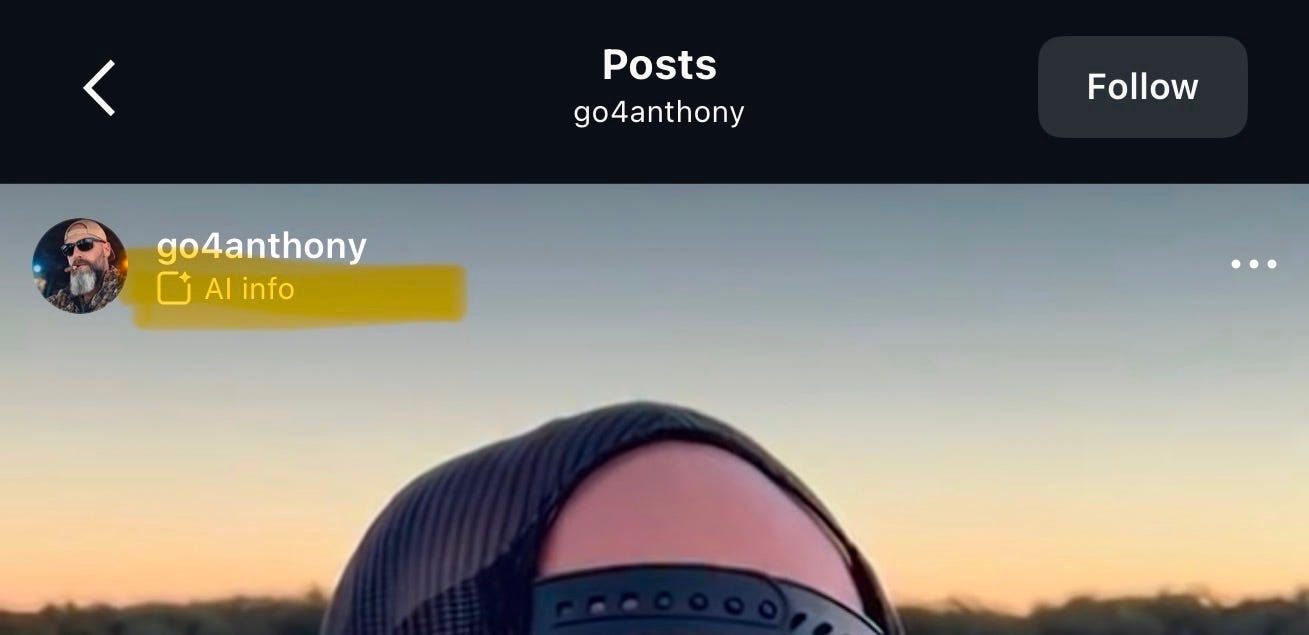
AI content labels: Instagram’s labels are not visible enough. When scrolling through posts on the home page, a small “AI info” cycles on the top left with the audio information. However, when viewing a video full-screen, “AI info” is hidden entirely. You have to tap on the description to pop up more information about the post, where “AI info” may be towards the bottom. Instagram may also choose to add a label when they have some other signals, but this is rare.
Verification: Like Facebook, Verification on Instagram can be purchased, and they do check a photo ID.
Media Player: Instagram has one of the best short-from video players. Just tap and hold to pause a video, and scrub with your finger at the bottom, just as expected.
If Instagram adds that second layer of detail like Facebook has and improves the AI labelling, they could earn gold next time.
Pros: Easy access to information. Some of the best page transparency information available.
Cons: AI labeling should be more visible. Location disclosure is not required.
🥉Bronze: YouTube🥉
To access account information on YouTube:
Go to the channel’s main YouTube page.
Click “...more” next to the channel’s description.
Scroll to the bottom of the popup on desktop or page on mobile and you’ll see account information under “More info”.
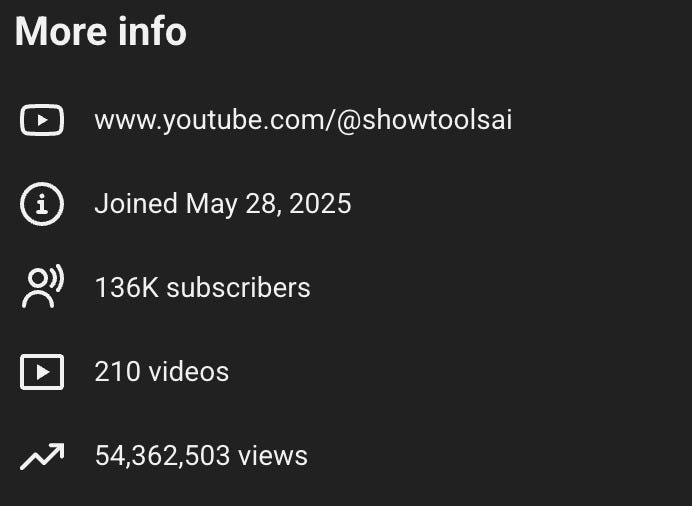
Here you can see their Location (optionally displayed for the channel) and Joined Date, but there is no section for previous usernames.
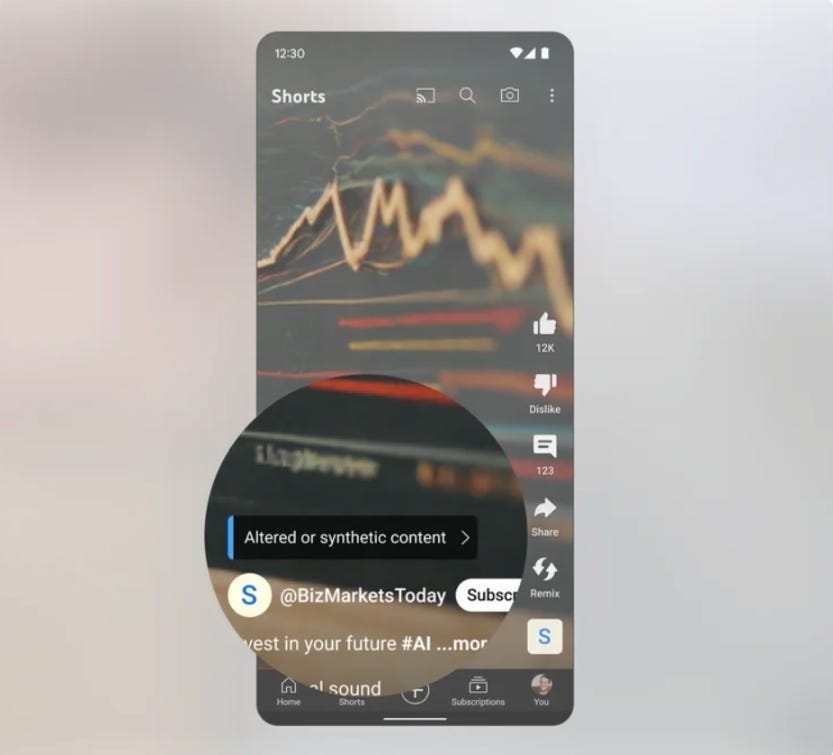
AI content labels: YouTube’s AI disclosure may pop up in the video player itself, above the account’s name in a short-form video, but that’s been hit-and-miss for me. You can reliably find this information by tapping on the video’s description and seeing if they disclosed “Altered or synthetic content,” YouTube’s phrasing for AI-generated.
Verification: Verification badges are reserved for pages with over 100,000 subscribers, and it is meant to limit impersonators. It’s reserved for creators, artists, companies, or public figures.
Media Player: While YouTube’s long-form player is great, its short-form player is really bad. You can’t zoom in, and pausing is laggy. Additionally, YouTube applies an “enhance” or “upscale” loo to many short videos, and many people think this makes some real videos look like “AI”. Not all videos are affected and creators can opt-out.
Pros: General account visibility
Cons: No visibility on previous usernames. Location disclosure is not required. Unreliable AI labeling.
❄️Missed the podium: TikTok❄️
Account information? What’s account information? TikTok doesn’t make it available. The best you can do is scroll down to their latest available post and see when it’s from. Location and account age are available through APIs, but that doesn’t count here!
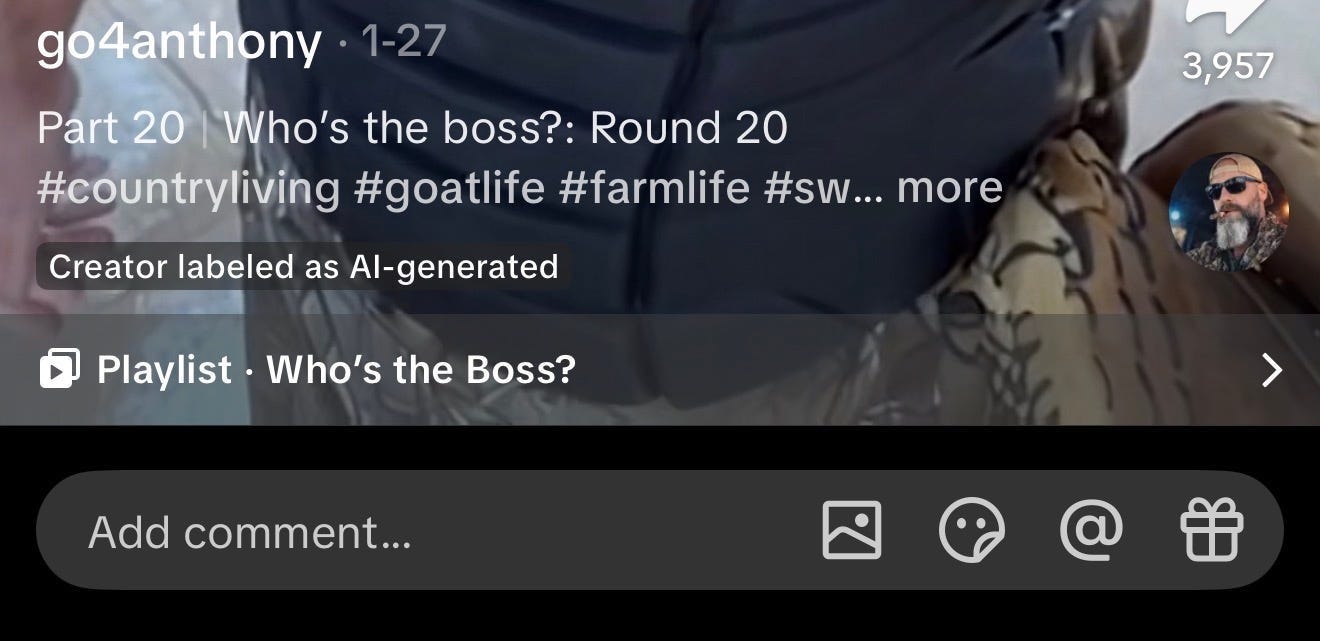
AI media labels: This is a relative strength of TikTok. Their AI label is on the bottom-left, under the description. It will say “Creator labeled as AI-generated” if creator opts for it, or “Contains AI-generated media” in the same spot if TikTok detects AI signals. TikTok is more aggressive with labelling, though it’s not clear exactly how (I’ve had real videos with the hashtag #aivideo labeled as AI by TikTok before).
Verification: TikTok’s Verification is among the strictest around today. It’s not paid, is reserved for notable people, and includes an ID scan.
Media Player: TikTok’s media player allows zooming, but the pausing has a delay and it’s less responsive overall. Scrubbing is easy enough.
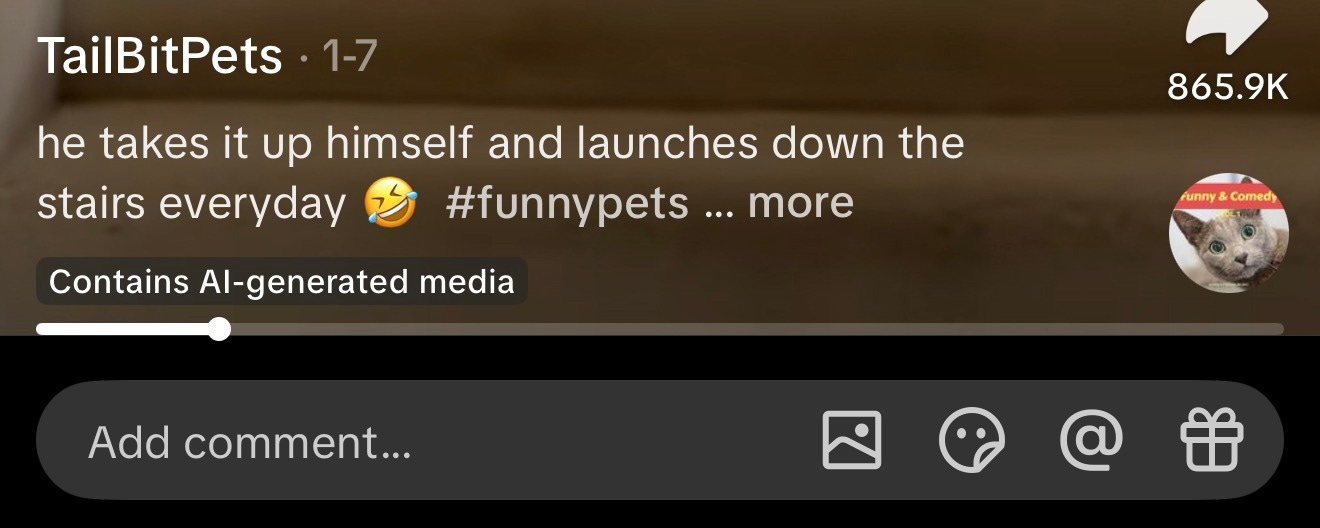
Pros: AI label clarity and verification system
Cons: Everything else
❄️Missed the podium: X❄️
Figuring out what X is doing is tricky. Feature changes are regular and inconsistent. I also think X gets more scrutiny than others because they have a (reasonable) reputation for a lot of bot activity.
X has made notable changes to page transparency. They attempted to roll out a public page location feature based on IP address in November, then rolled it back after they claimed it was inaccurate. After some more improvements, today its page location says it’s based on “recent IP addresses of a user. It can be impacted by recent travel or a temporary location.” But, location can be manipulated on other platforms, too.
There are two places to find information:
Go to the account page. Here you can see their claimed location and the date they joined.
Tap on their joined date to get more account information.
Here you can see the date joined, account location, verification status, and username changes, as well as the “connected via” section showing what kind of connection they use to access X.
AI media labels: It’s unclear what the norm is, or what they want it to be, but it’s currently really bad. Grok’s own AI generations don’t have labels. You can’t put an AI label on a video.
Verification: X doesn’t make it easy. Blue checks can be bought or given with no actual verification or ID check. Gold checks indicate it’s a business or premium account, and Grey checks indicate a government or multilateral organization.
Media player: This is my favorite media player of the group. It feels the most like a “desktop” experience. It’s very responsive, scrubbing is easy, and it even allows persistent zooming (it sticks to your zoomed area rather than requiring you hold the zoom), which is extremely useful for finding artifacts.
X has some of the most potential, but its implementations need to be cleaned up.
Pros: Good account visibility, excellent media player
Cons: Inconsistent experience, no AI labels, verification is confusing
🏅Developing a new gold standard🏅
Checking account transparency information should be as easy as swiping away from a video.
The minimum distance from a video in a recommended feed to the platform’s account transparency information is 3 taps (Instagram). Shrinking that to a single tap would be an automatic gold medal.
Users should be able to tap the account name, a separate button on the side, the area where the AI label shows up, really anywhere in the video player so the account’s information can pop up in the feed. The video should keep playing in the background. Make it seamless to encourage users to change their behavior.
The Closing Ceremony
Team Meta dominated the podium this year, securing both the Gold and Silver medals. YouTube was right behind them with the Bronze. While the top three were competitive, TikTok had significant ground to make up, and X was held back by inconsistent performance.
The next four years will be where the true competition takes place. By the next winter games in 2030, social media may work very differently. The fabric of social media could be torn apart by the distrust AI media brings unless they adapt. Thankfully, there’s a financial incentive to get it right. Platforms must avoid “doping” their own metrics with synthetic content if they want to retain advertisers.
But the most difficult problem for tech companies will be balancing this with their own AI generation efforts. ByteDance, TikTok’s parent company, has their own AI generation model called Seedance that’s causing alarm. Google put Veo right into YouTube. Of course, Grok images and videos are all over X, and Meta has their own image generation models. None of these companies are innocent bystanders of the AI content race. If these platforms run themselves off the course by prioritizing their tools over trust, we’ll have to disqualify them and take our time elsewhere.