

Why are 174 AI news accounts trying to divide the US and Canada?
And what do Swedish fighter jets and potato bans have to do with it?

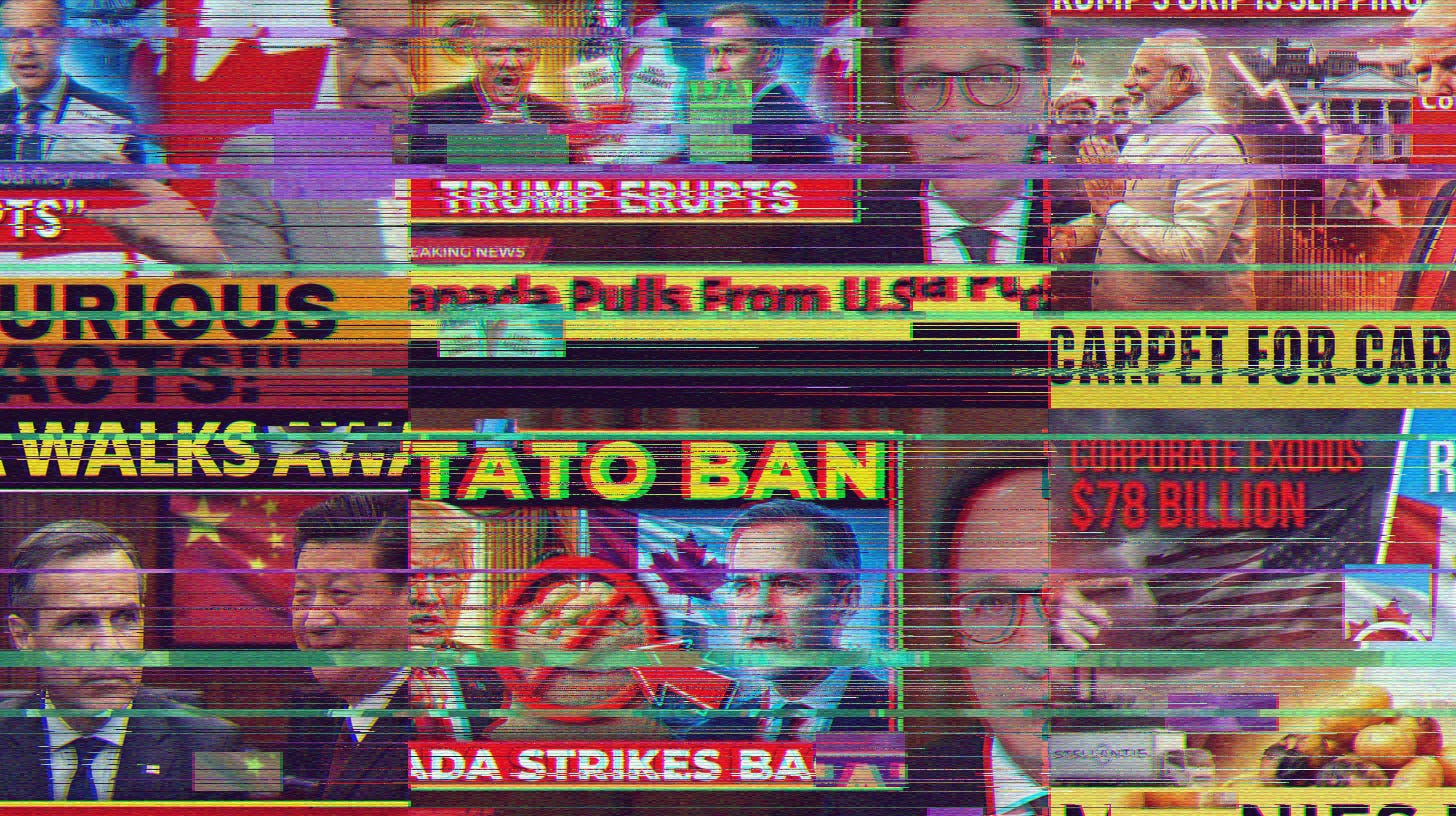
In January 2026, Sweden’s Saab, an aerospace and erstwhile car manufacturer, submitted a proposal to sell 72 Gripen fighter jets to Canada as an alternative to American F-35s. This is a notable development in defense circles, but it’s a relatively niche story. So, it was somewhat surprising to find a coordinated inauthentic behavior (CIB) campaign discussing the Gripen deal almost nonstop and fabricating key details along the way. It turns out these videos were part of a much larger, sustained effort by this network to push content aimed at (further) dividing the US and Canada.
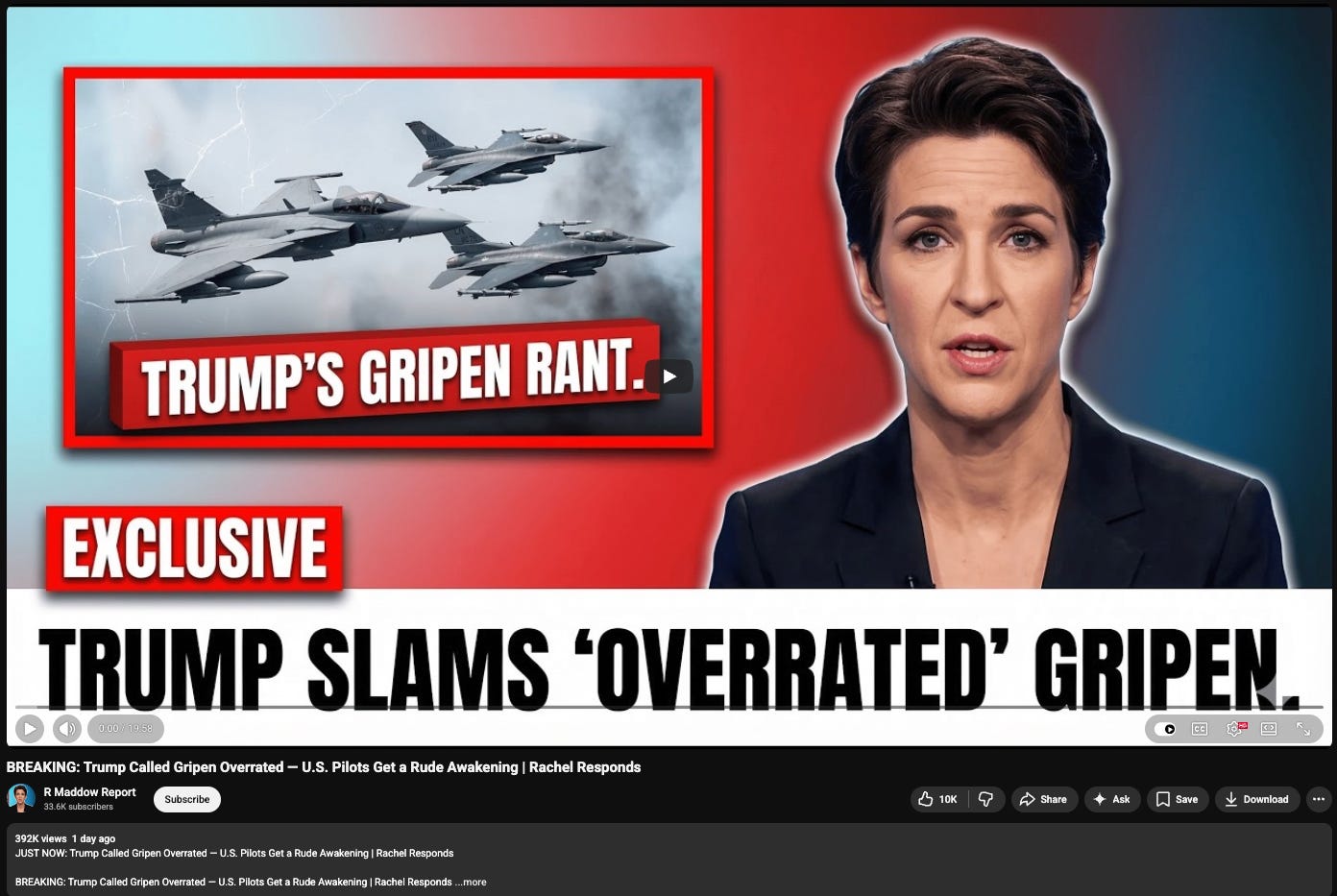
We found 83 videos about the Gripen deal across 46 different accounts, all delivered by AI-generated news anchors impersonating real television hosts. The accounts were usually less than a week old, many of them falsely claiming a deal for 120 jets had already gone through. However, these Gripen videos are a small subset of the 930 videos, from 174 accounts across YouTube and TikTok that we collected during this investigation.
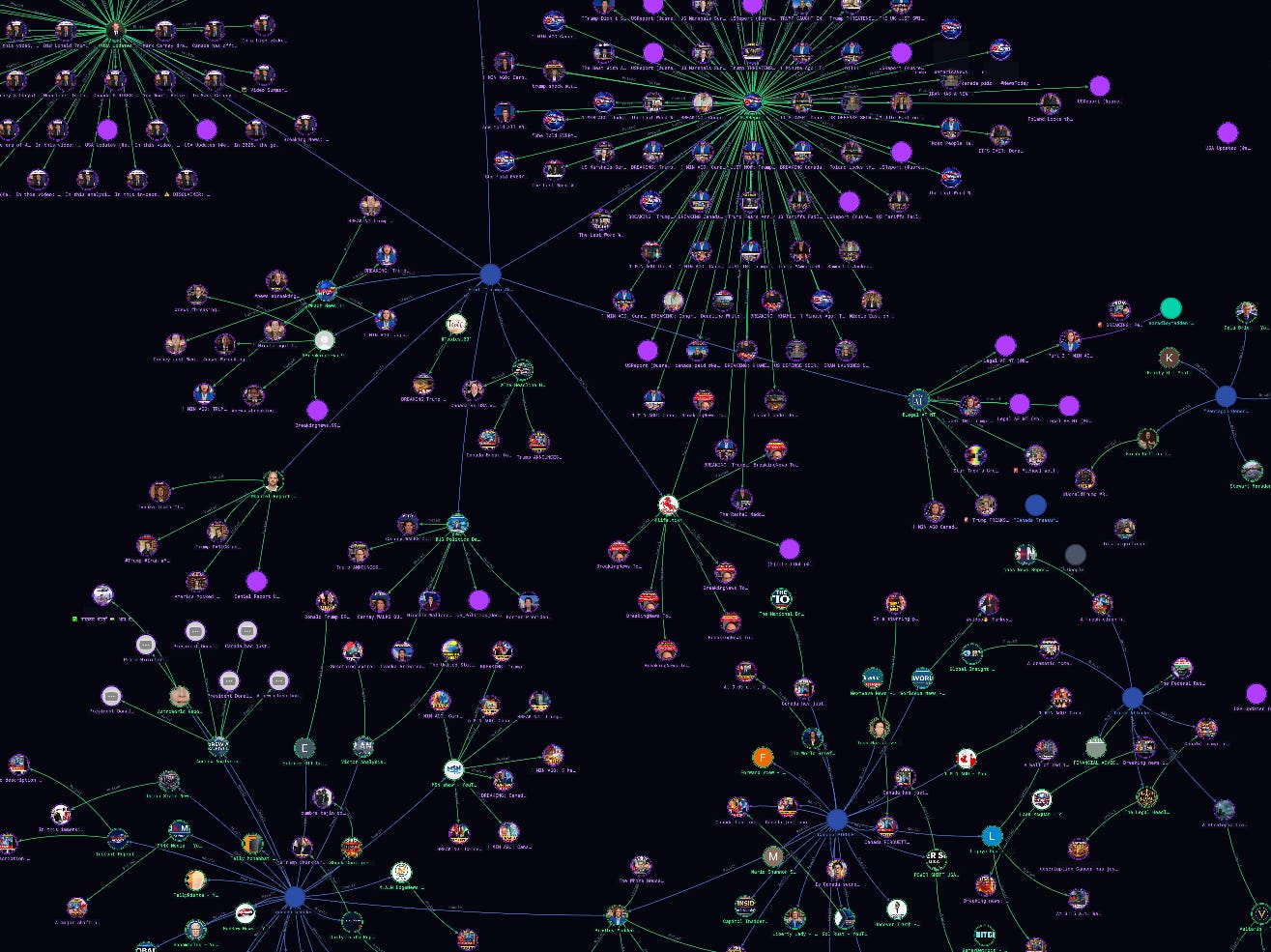
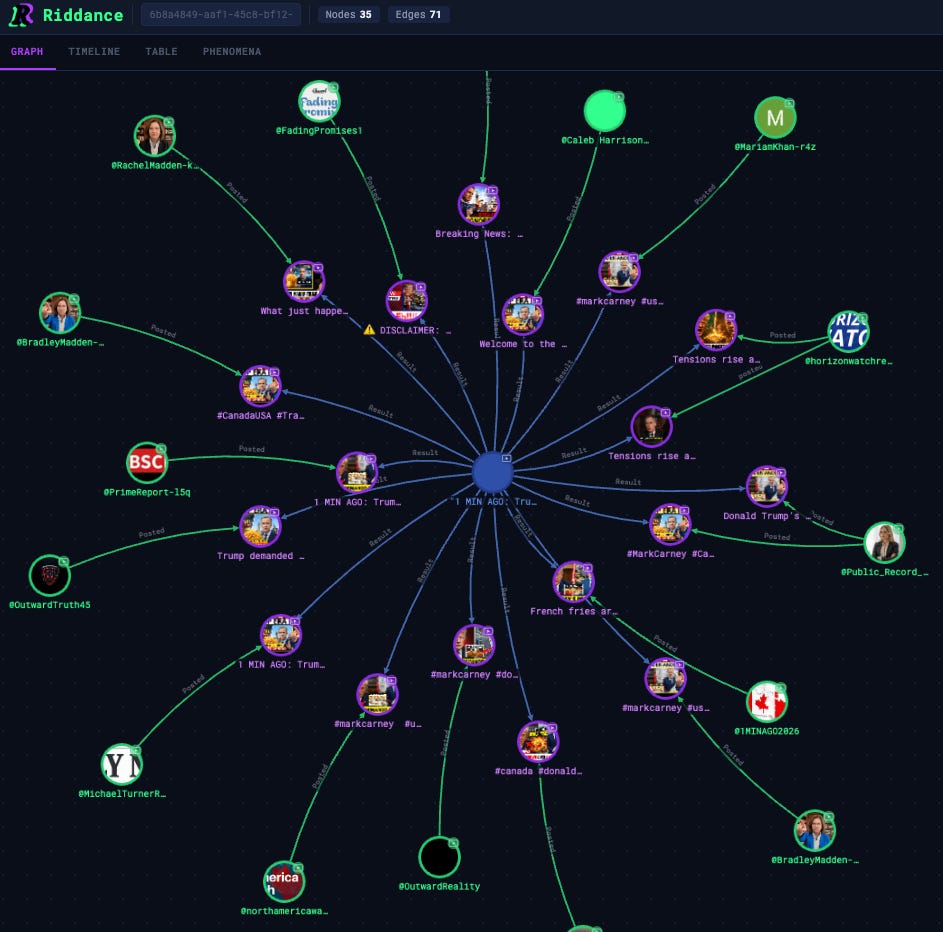
In the graph above, blue nodes represent searches for video titles, green nodes represent accounts, and purple nodes represent videos or posts. The blue edges indicate search results and the green edges represent account ownership of a piece of content.
While Riddance has analyzed a subset of the accounts in this network before, this deeper dive revealed several new operational and narrative dimensions, as well as possible leads on attribution. The videos that we analyzed accumulated over 18M views and 780K likes, with much of the content only days old at time of reporting. YouTube and TikTok appear to be actively moderating this campaign, as several channels were actioned (removed) during the course of our investigation.
Two things stand out about this network:
Messaging sophistication: Almost all of the channels combine real breaking news with either exaggerated or else outright false content, causing frustration, confusion, and misplaced anger from viewers and commenters.
Messaging discipline: In general, the AI news stations we analyzed focused almost exclusively on further distancing the US from its allies with a particular focus on Canada.
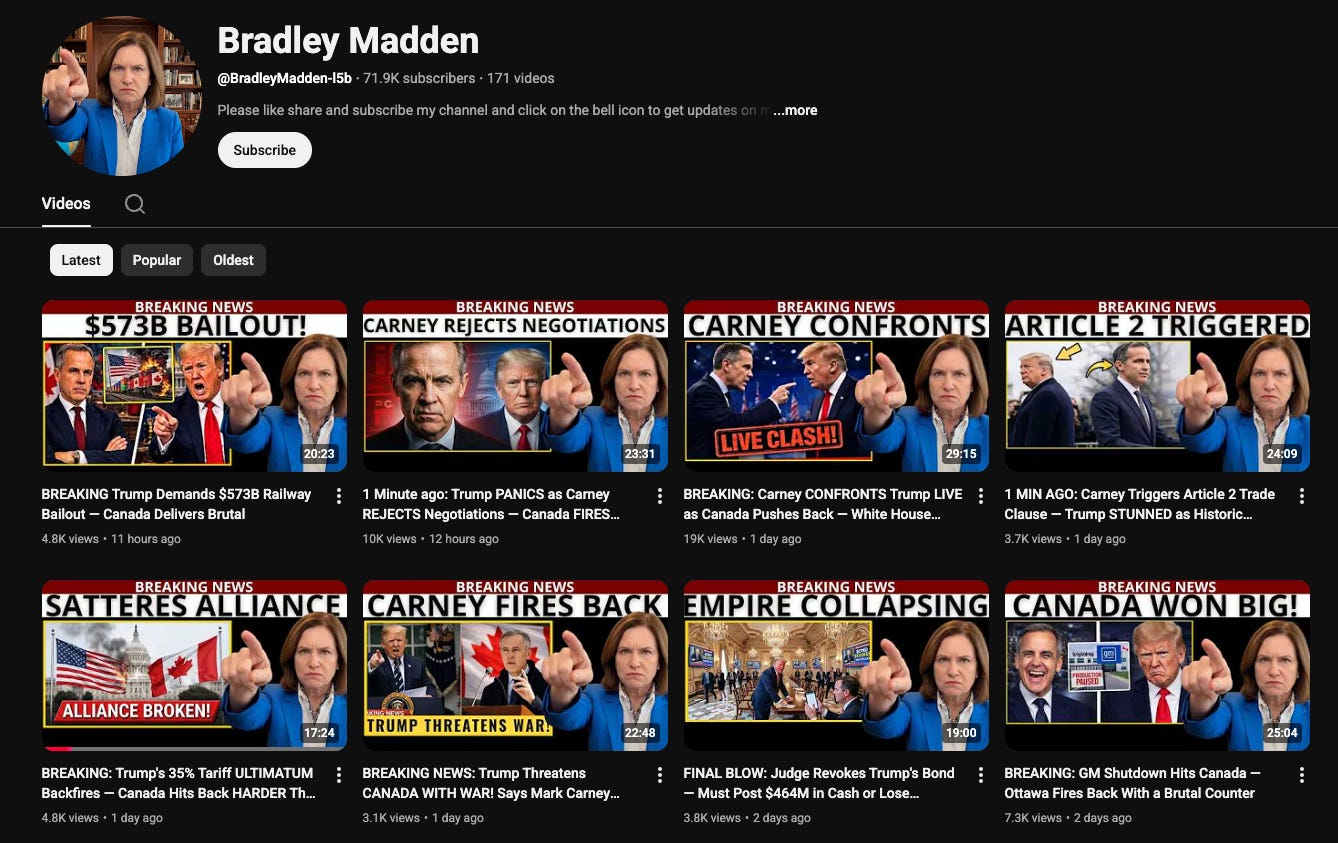
The channel below, one of several that take on the entirely-AI generated “Bradley Madden” persona, delivers daily reports about US-Canada relations that are largely fabricated. Other channels position themselves as if they are based in Canada and broadcasting to a Canadian audience.
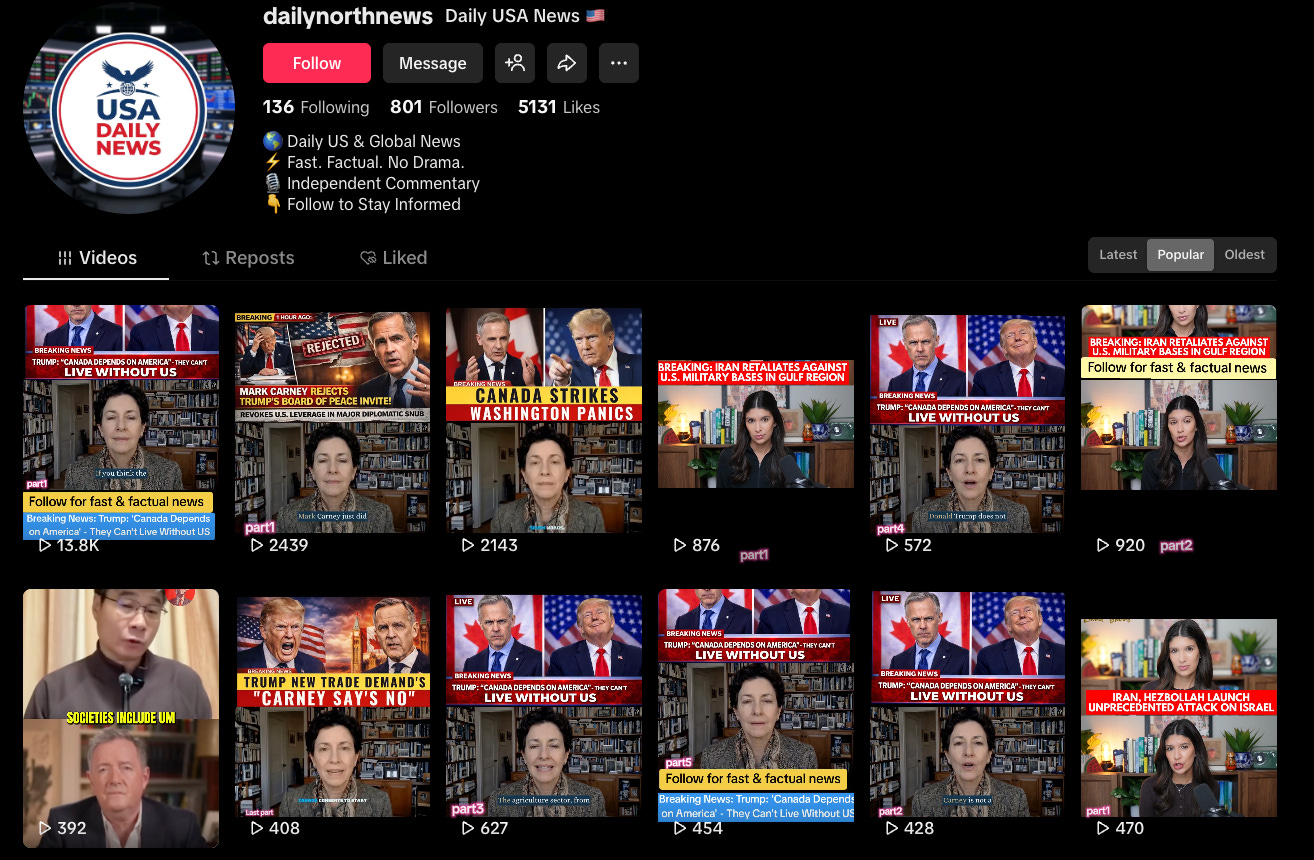
A similar set of channels on TikTok amplify and modify similar messages. This account, Daily USA News, is representative of the TikTok side of the campaign.
The videos we analyzed often have overlapping titles (and scripts) with other channels in the network, even when the AI anchors delivering the news are totally different. This suggests that the scripts themselves are distributed to the channel makers, who then have a degree of autonomy as to how they produce the videos.
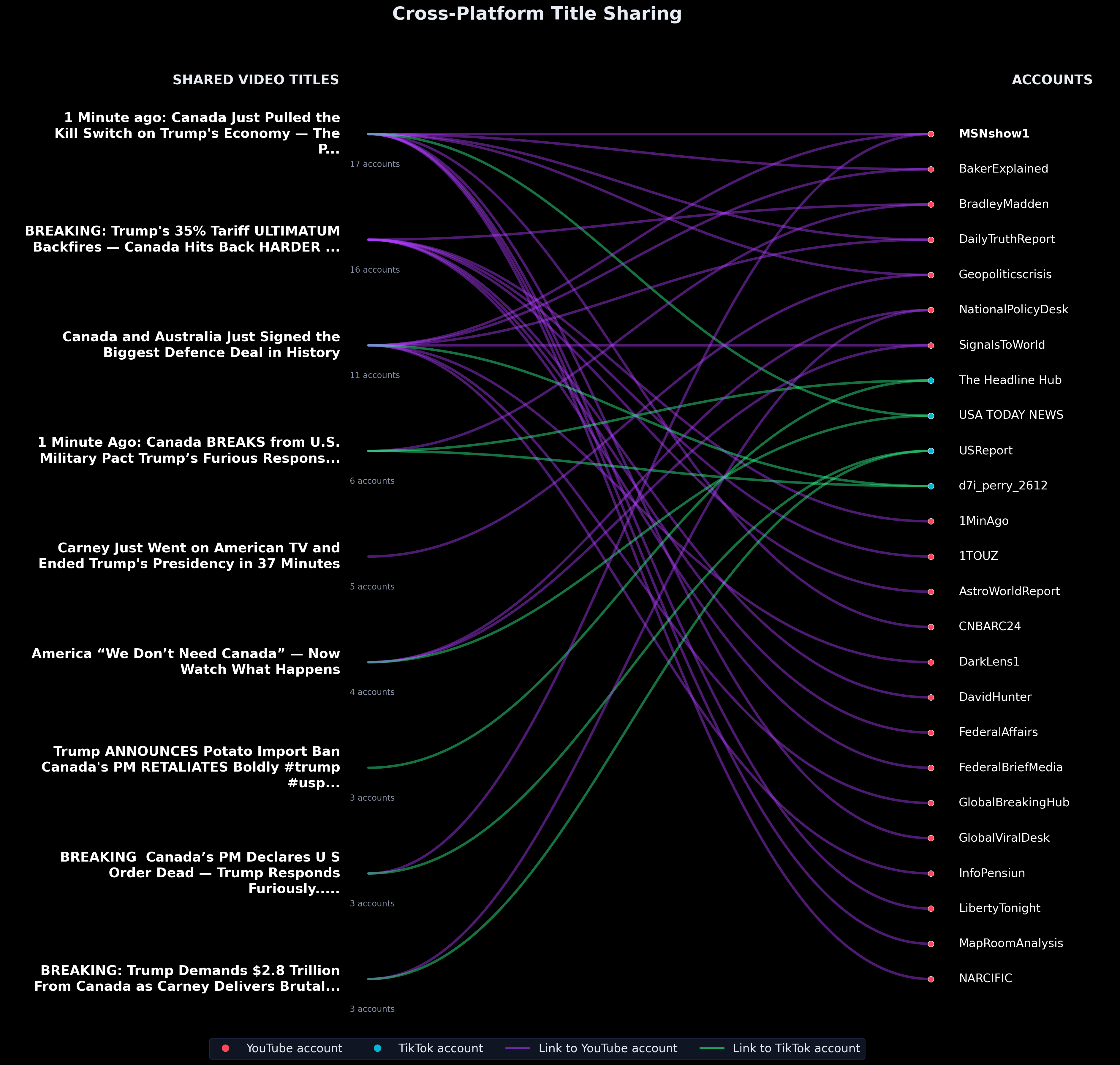
The operation has a least five distinguishing characteristics:
Fake outlets that siphon credibility from real sources: Channel names like MSN Show, BCN News, News Nation 24, all have the feel of real news stations, and the channel branding follows suit.
AI anchors impersonating real hosts: This campaign includes impersonations of prominent newscasters as well as fabricated personalities. Impersonated personas include Rachel Maddow, George Will, Tucker Carlson, and Jimmy Kimmel.
Identical scripts across accounts: As the diagram above demonstrates, there is a high degree of overlap between video titles. We suspect that video script overlap may be even higher than video title overlap.
Cross-platform distribution: The campaign exists on both YouTube and TikTok, and while these operations don’t look identical across platforms (videos seem to originate on YouTube and then move to TikTok), we identified at least 66 exact content matches between the two platforms.
Inflated engagement numbers: many accounts seem to have artificial follower numbers, some in the tens of thousands despite being only days old. Of the 39 most prominent YouTube channels in the network, 87% uploaded their first video in 2026.
Like before, most accounts and videos didn’t go viral, but the ones that did generated thousands of comments, tens of thousands of likes, and hundreds of thousands of views. It’s also worth noting that some of the AI is decisively better than in previous campaigns, with commenters rarely identifying the clips as AI generated.
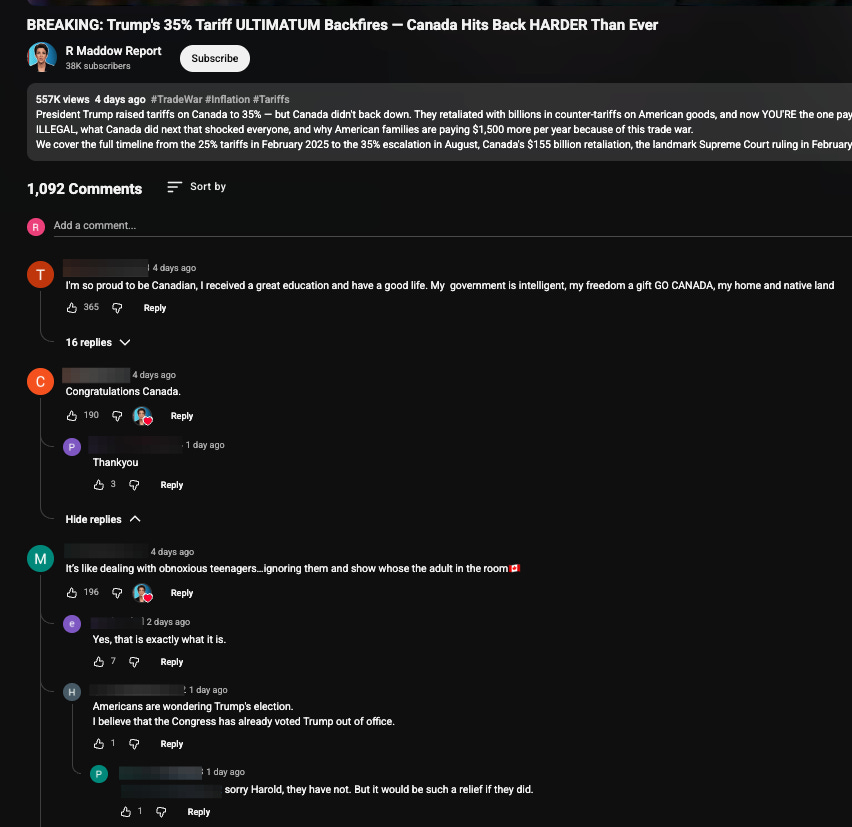
The 20 second clip below is from the video these commenters were reacting to, and it’s substantially higher quality than AI Maddow videos that we covered just a month ago.
As you would expect, higher video quality translates into more engagement, and more accounts in the network will likely follow suit, which means even more difficult detection work for platform-side moderators.
A combo of real, exaggerated, and fabricated stories
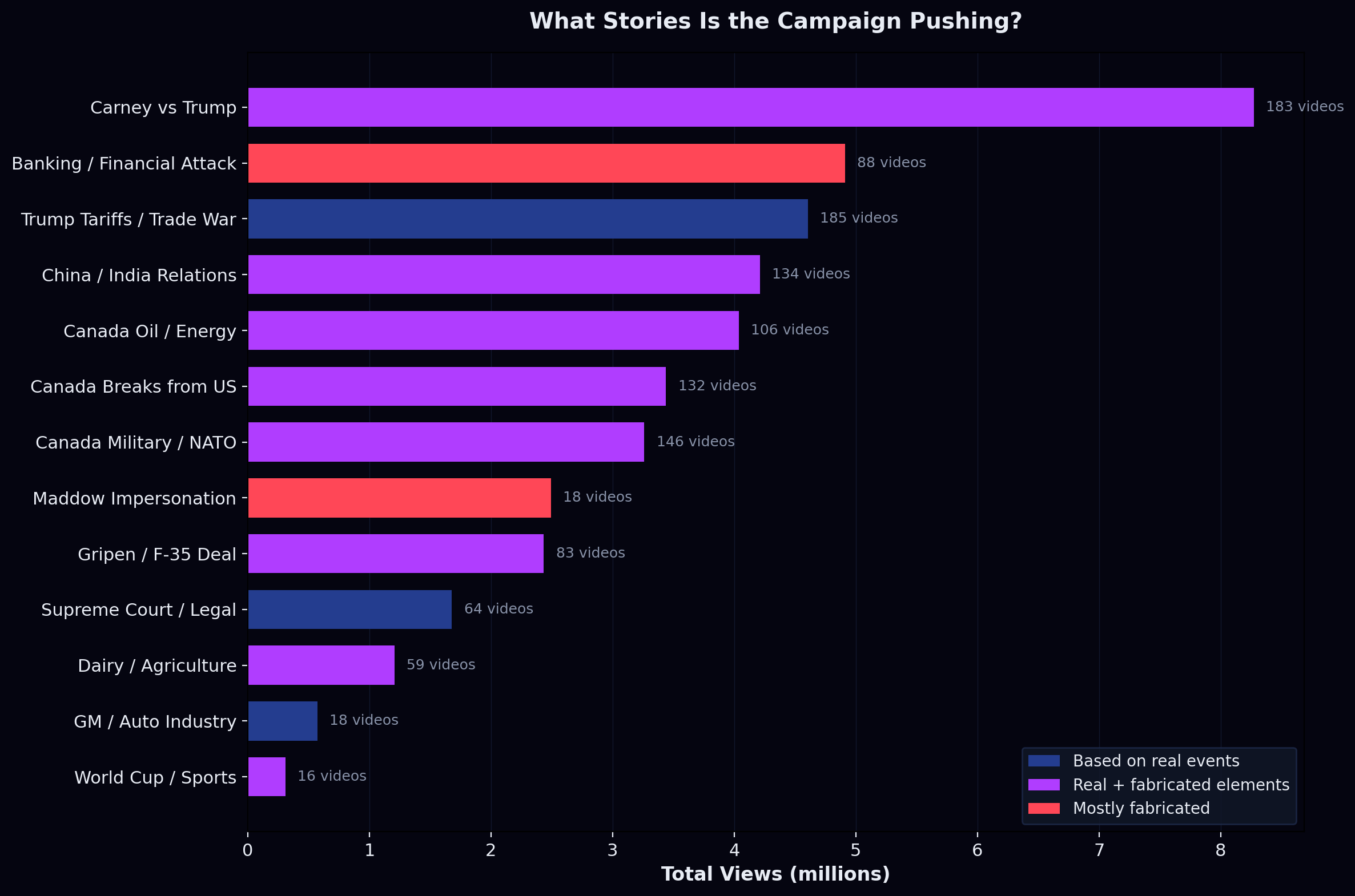
We maintain that all of the content from these AI news personas is in an important sense, fake news. But, some of their stories were more or less factual, while others were exaggerated, and others still outright fabrications. For example, Trump never froze $89 Billion in Canadian assets (despite what these videos might say), the Gripen order is still under discussion (not concluded for 120 aircraft), and Trump never banned Canadian potatoes. Yet, regardless of their factual status, all of these videos follow a similar narrative arc–the US-Canada relationship is broken, and Canada stands to gain by walking away.
I want to emphasize how widespread this campaign is. At some point we had to arbitrarily decide to pause the investigation in order to write it up. We’re by no means capturing the entirety of it with this sweep. We found this video title after the bulk of the analysis was done—“1 MIN AGO: Trump DEMANDS Canada’s Potato [sic.]”. Note the non-idiomatic english (potato should be plural or else modify a noun) that is repeated verbatim by all the channels.
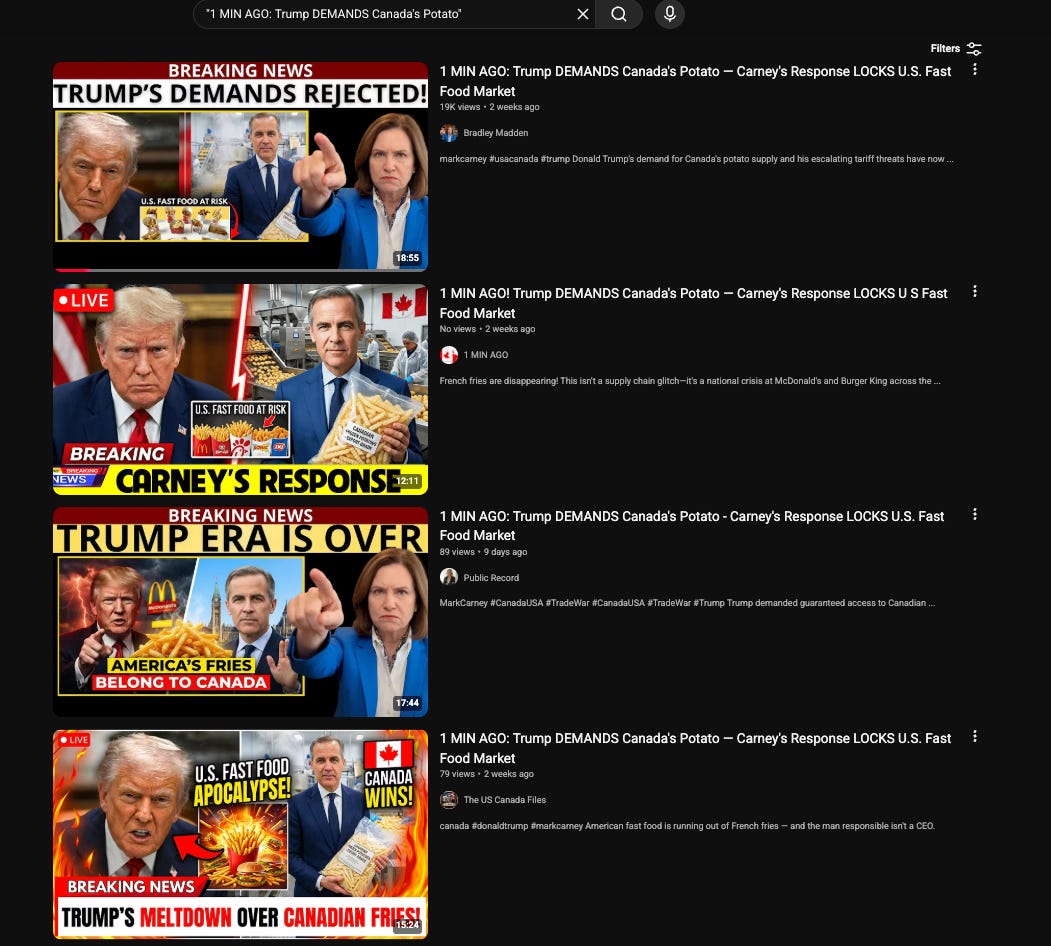
Using a Riddance graph, we can see 19 videos from 16 accounts that all use either matching titles or scripts and come from accounts that are in the broader network we’re tracking.
Who’s operating this campaign, and why?
We don’t have any definite attribution yet for this activity; however, there are several indicators that might point to China or South Asia as the origin. At first, we assumed this campaign was profit-seeking, aiming to maximize engagement. But once we observed their almost myopic focus on US-Canada relations, including some very niche topics with national security implications, we had to consider the possibility of a state actor.
The TikTok side of the campaign has clearer attribution signals than the YouTube side. Between upload times, account names, and some video editing mishaps, we have medium confidence that a Chinese actor is at least amplifying the campaign on TikTok.
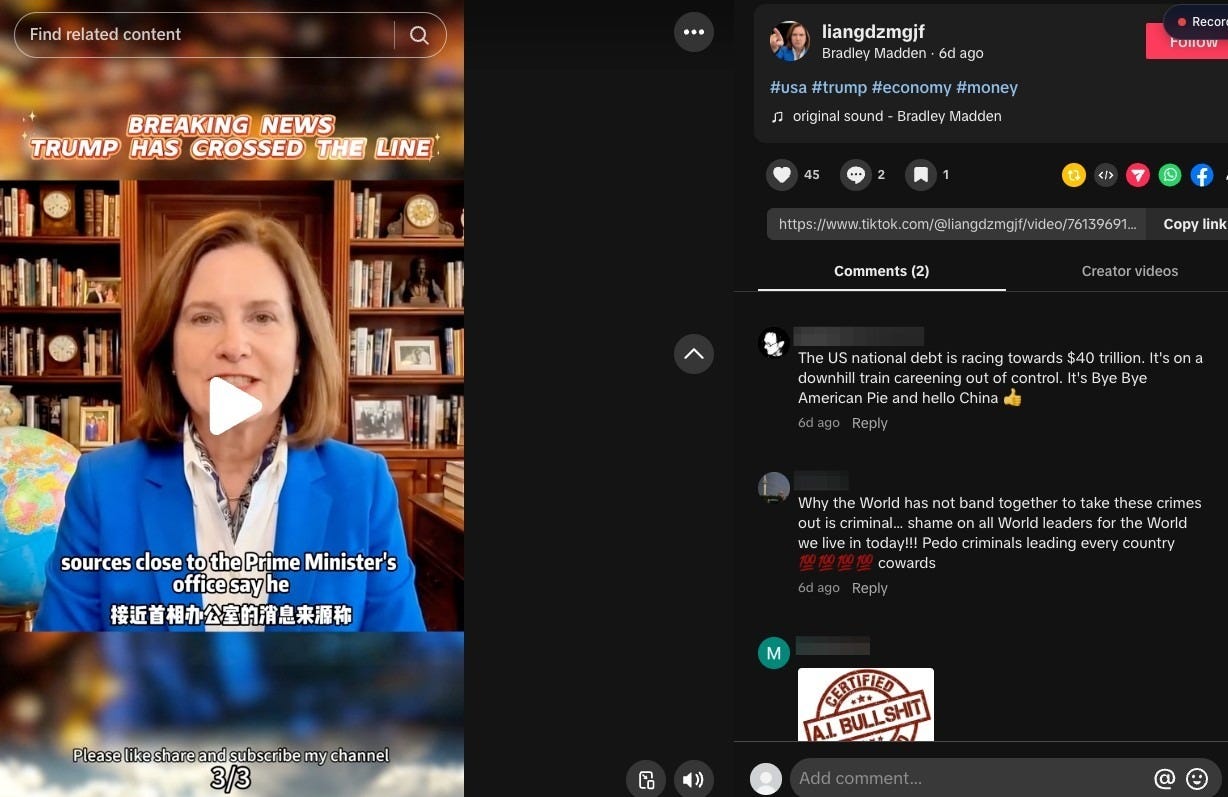
A lot of things stand out about this video, including the fact that the mandarin subtitles appear to be part of the edited transcript and not a post-production alteration made by the channel. Also notable is the account name, since Bradley Madden is one of the most prolific names in the network, we have high confidence the channel was not just randomly reposting a video it came across elsewhere. Furthermore, if we look at upload time for the TikTok videos in this network, we see peaks around 9-11AM Beijing time.
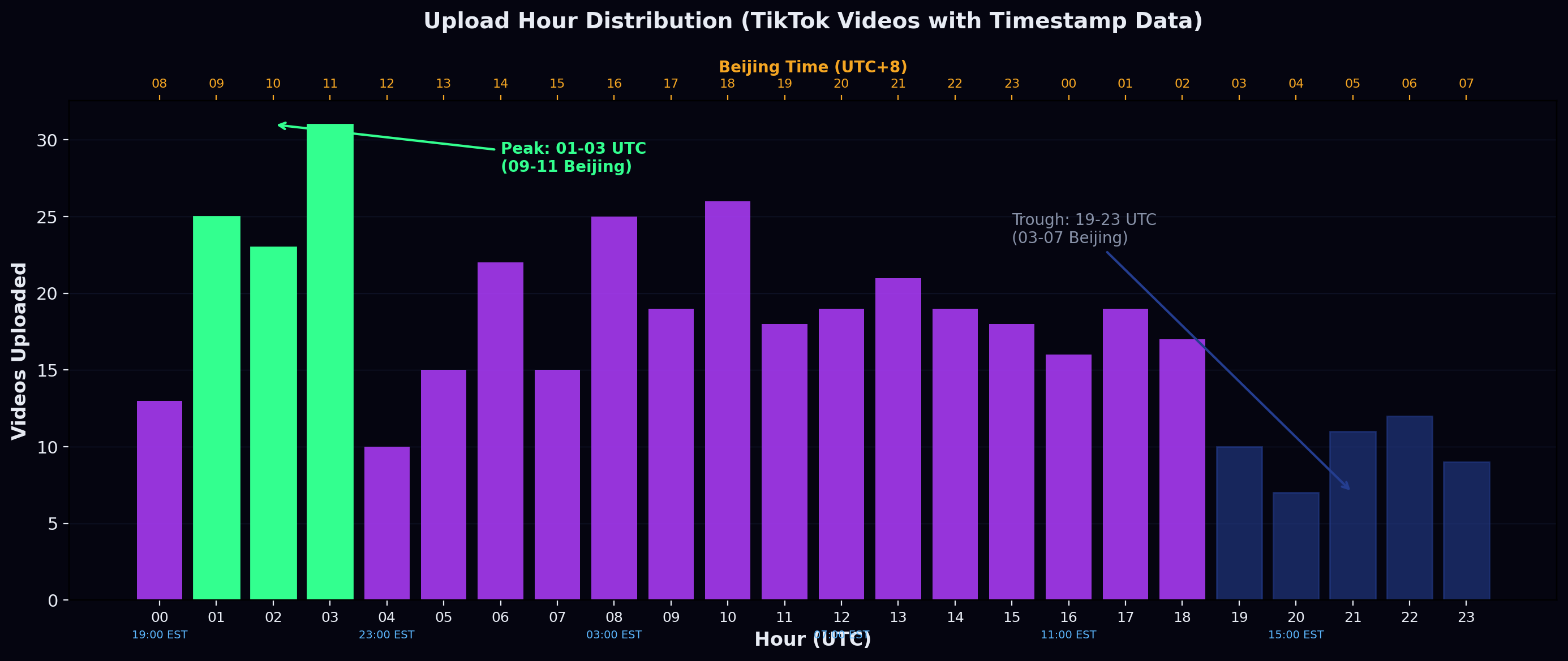
However, the YouTube data tells a different story, both in terms of posting times and account history.
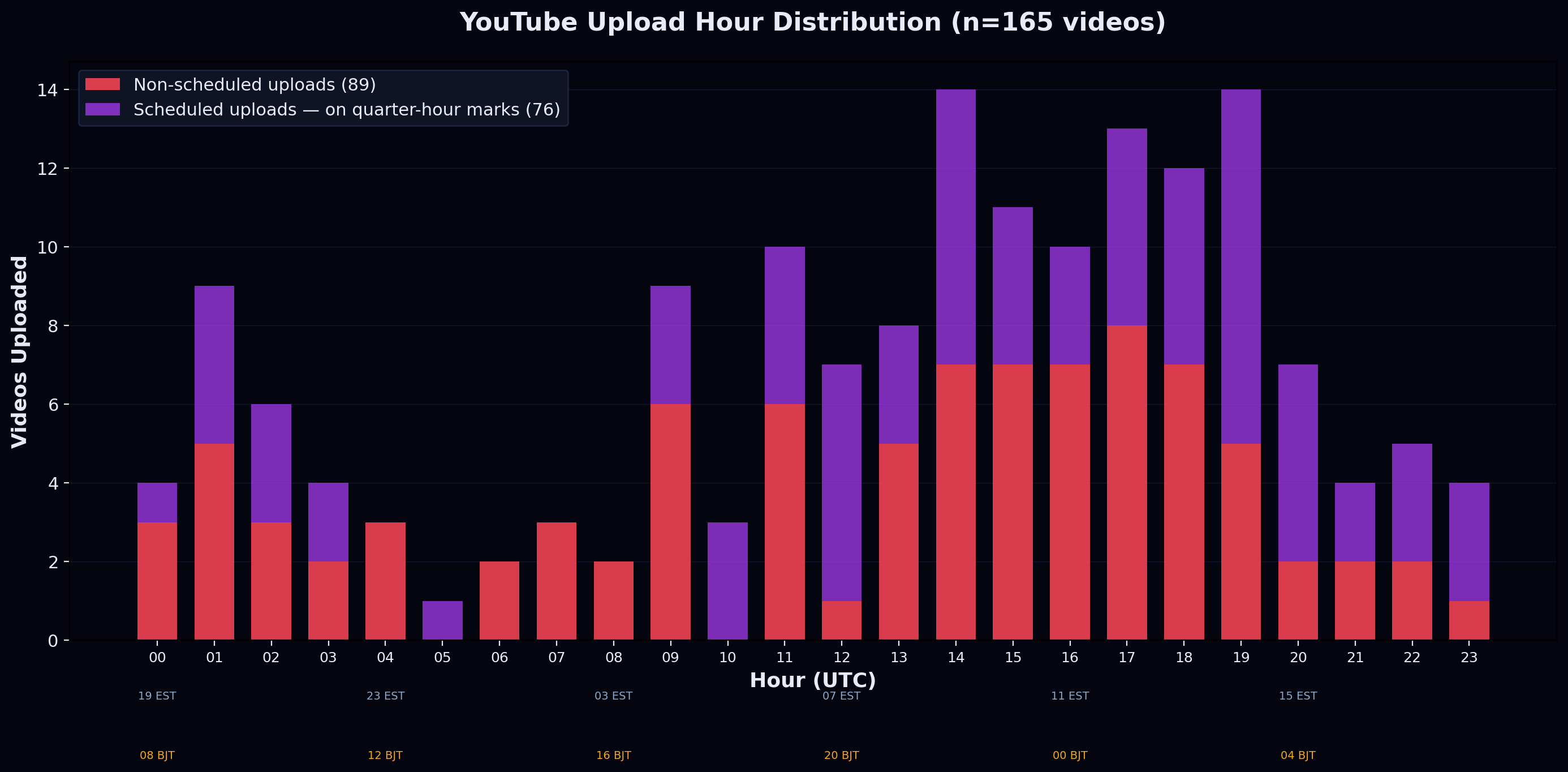
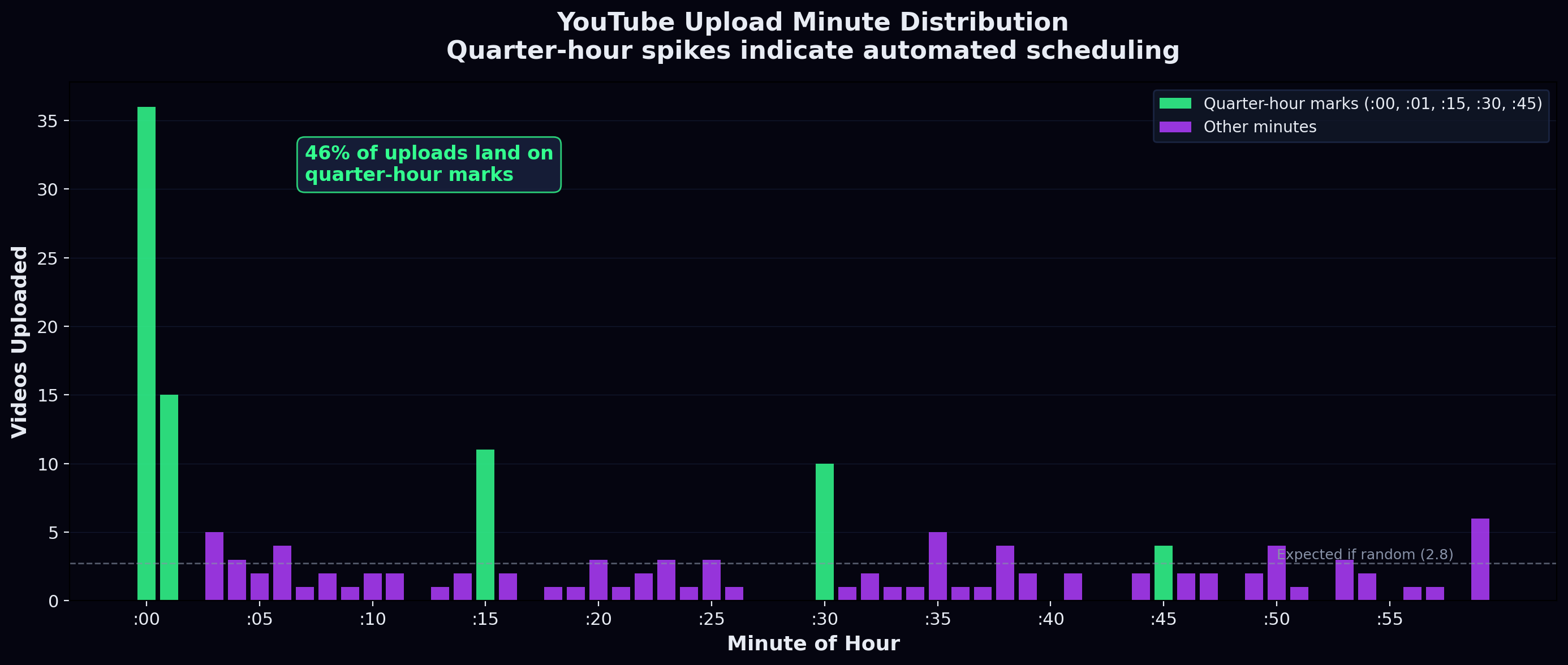
The YouTube channels also have significant automation, which could suggest intentionally deceptive upload times.
There are also several accounts that published Hindi news content before switching to the current campaign, and a portion of the videos discuss improving Canada-India relations as well as Canada-China relations. Accounts can be stolen or purchased from other AI-slop operations, so previous account behavior is not necessarily a good indicator of CIB operator origin.
One thing that is clear is that the operator of this campaign is doing more than just vying for engagement from politically active and potentially gullible viewers. They are trying to further separate the US from its allies by fomenting anger between online populations, using sophisticated tactics and surprising discipline. Once you put on your geopolitics hat, 83 videos dedicated to the Gripen deal and a fabricated potato ban start to look like an actor with an agenda.
What to watch for next?
A focus on US-Canada relations was not the first topic this network has pushed, nor will it be the last. We already see them pivoting to the war the US and Israel started in Iran, and it’s more than possible the network will take an interest in this year’s midterm elections in the coming months. As our first article showed, the accounts involved are happy to make things up about Trump and congress, and as their methods improve—both in terms of messaging and AI quality—this campaign will only become more formidable.
Oh my goodness... thank you for sharing this. Not surprising to see AI used in this way, but also, still somehow surprising that dividing the US and Canada is a likely goal of someone in Asia. The invisible game of geopolitical chess is being waged, and AI is a new piece on the board.